ADVENTURE PARK ROI: 5 KEY FACTORS for a profitable investment
ROI in UNDER 4 YEARS – POSSIBLE?
A return on investment of under four years may sound ambitious for tourism and leisure projects. With a carefully planned concept, however, it can be realistic. KristallTurm® considers a fast ROI one of the key advantages of its High Ropes Courses. Whether an adventure attraction pays for itself within just a few years depends on several concrete factors: visitor potential, ticket pricing, utilisation, capacity, staffing costs, maintenance, financing, season length, additional revenue streams and synergies with the existing location. Together, these factors determine whether an attractive leisure concept becomes a commercially viable investment.
GET IN TOUCHHow quickly an investment pays off can essentially be broken down into the following calculation: Amortisation = Total investment / annual operating surplus
The formula itself is straightforward. The challenge lies in the assumptions behind it. In practice, average values alone are not enough. Every location is different, with peak and low-demand days, holiday periods, bad weather phases, staffing limitations, maintenance windows and varying booking rates.
A solid business case should therefore consider three scenarios: conservative, realistic and ambitious. The conservative scenario is particularly important. It shows whether a project remains economically viable even if the first seasons do not run perfectly or visitor numbers develop more slowly than expected. The ambitious scenario shows what becomes possible when location, marketing and operations work together effectively.
Only once these assumptions have been properly reviewed is it possible to assess whether a High Ropes Course or adventure park concept is economically viable at a specific location. Five key factors have a particularly strong impact on revenue, utilisation and ongoing operating costs.
FACTOR 1: Use Existing Visitor Frequency
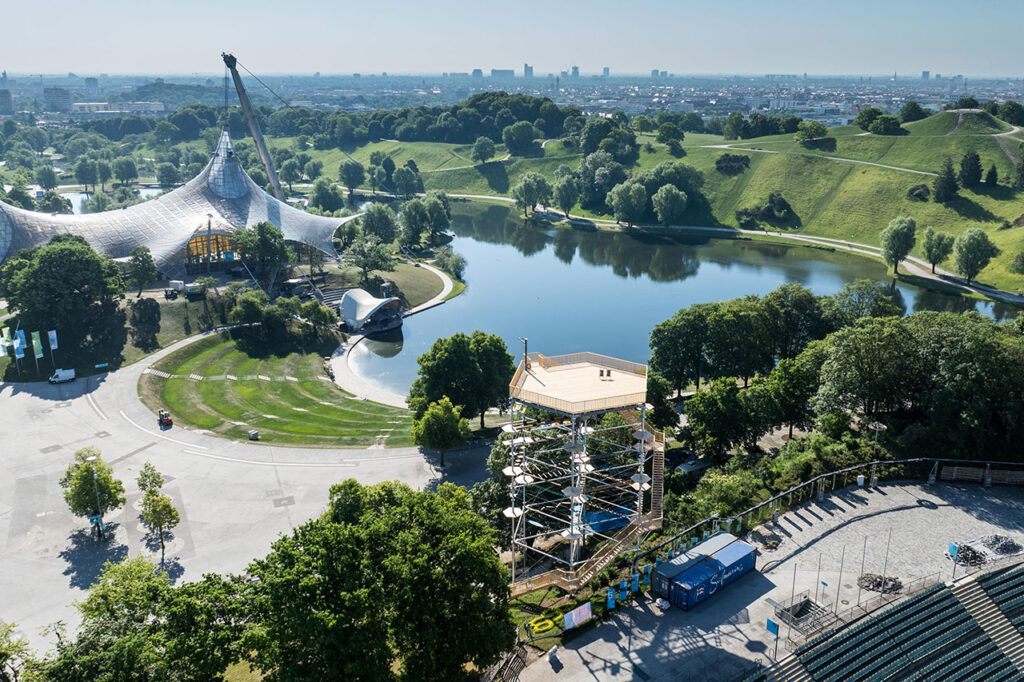
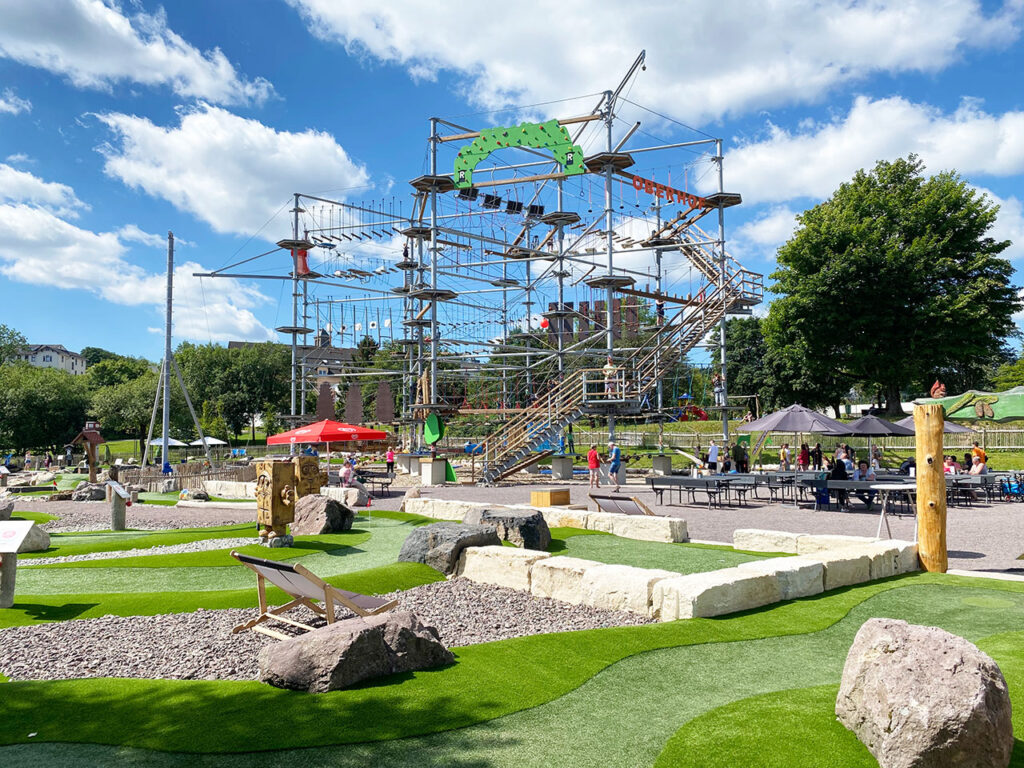
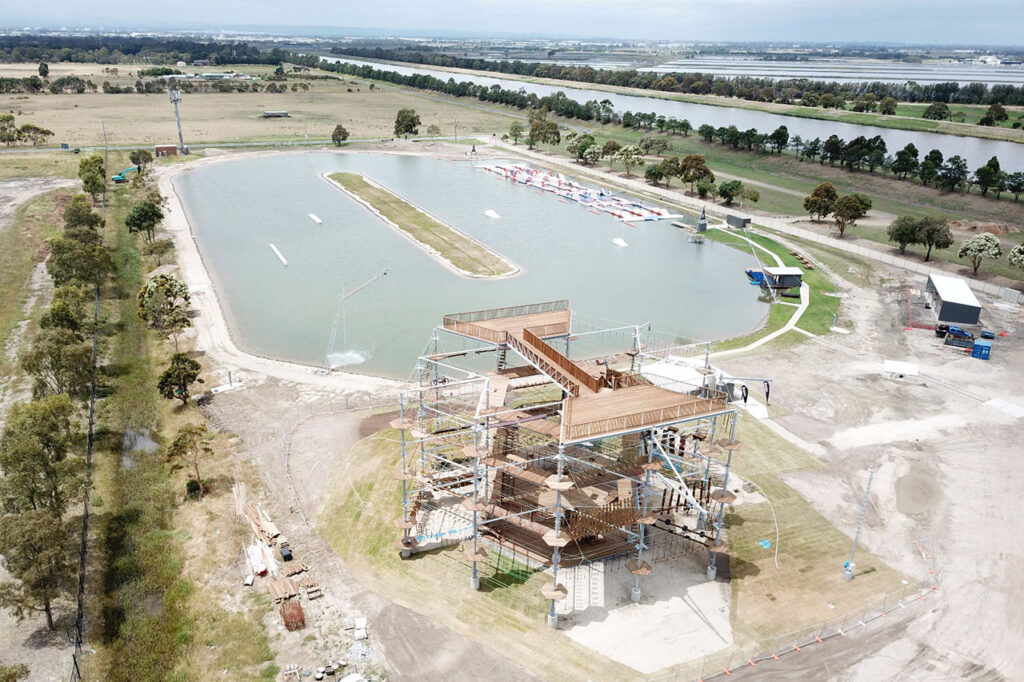
The most expensive guest is the one you have to attract from scratch. A much stronger starting point is a location where people are already present: an amusement park, mountain resort, campsite, hotel resort, lake, wake park, zoo, shopping mall or tourist destination.
At these locations, a High Ropes Course does more than generate direct ticket revenue. As a visible adventure attraction, it can increase dwell time, support additional spending and create a new long-term reason to visit.
Factor 2: Capacity Only Creates Value When It Can Be Used
High capacity sounds attractive, but it has to be usable in day-to-day operations. The entire guest journey matters: online booking, ticketing, check-in, equipment issue, safety briefing, entry, route selection, supervision, exit and return of equipment.
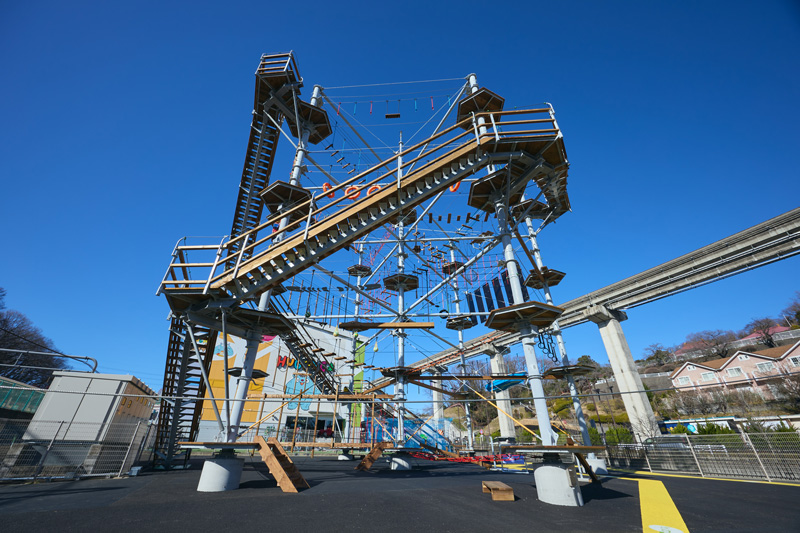
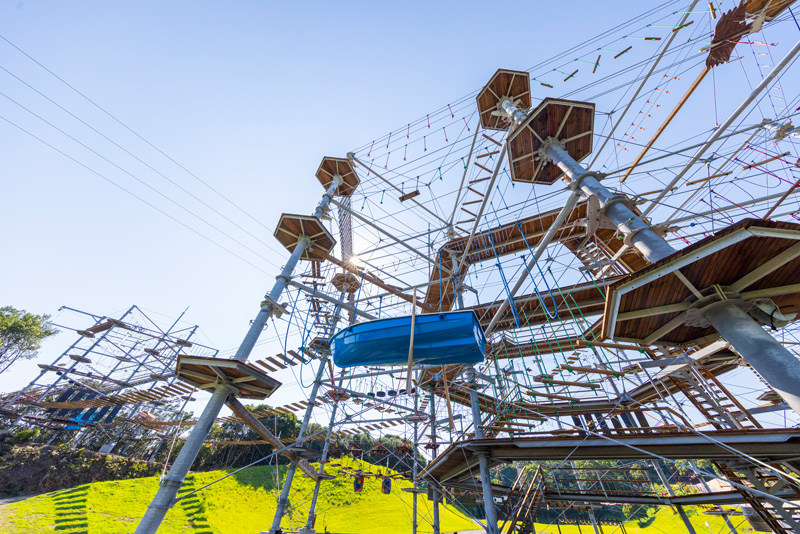
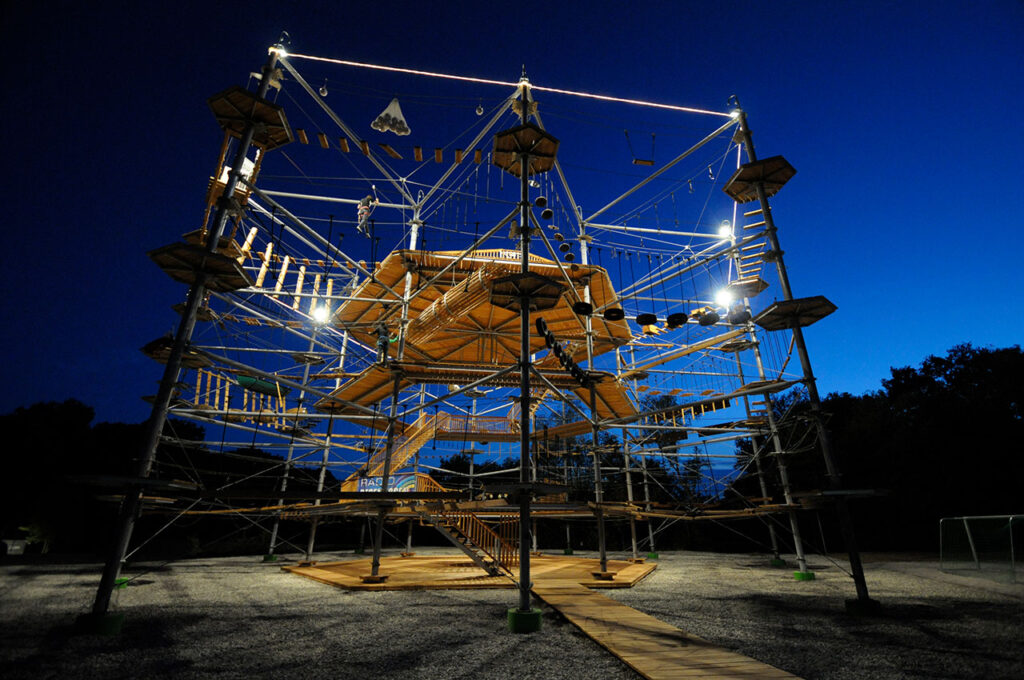
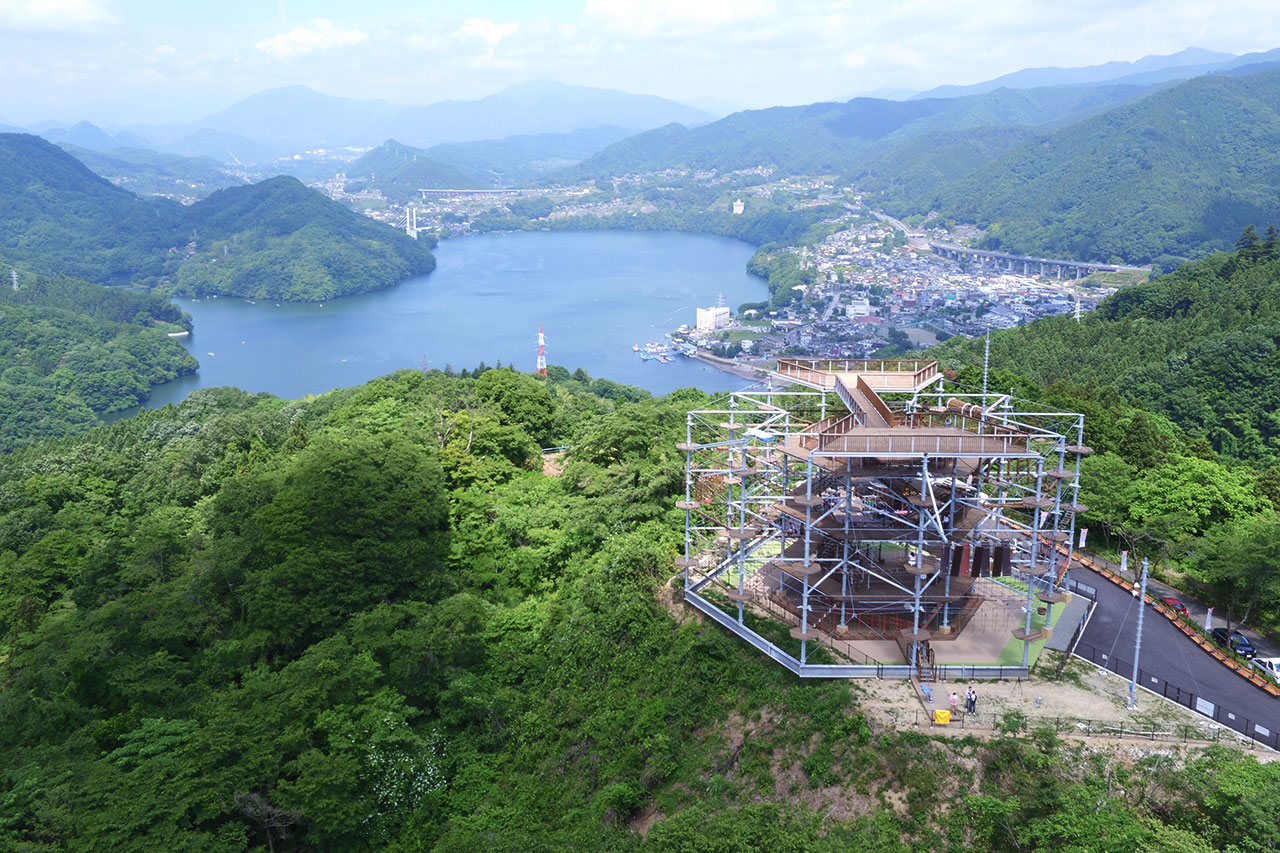
KristallTurm® High Ropes Courses are designed to offer high capacity on a comparatively compact footprint. The Signature model KT-18, for example, can accommodate up to 160 participants at the same time on approximately 900 m².
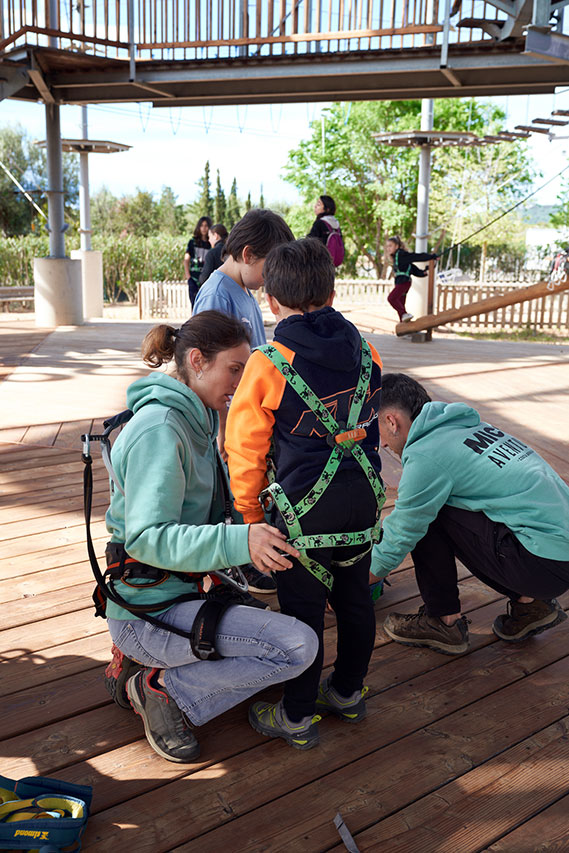
However, this capacity only becomes economically valuable when staffing, briefing, safety systems and visitor flow are planned accordingly. For operators, the key question is not only how many people an adventure park can theoretically handle, but how many guests can move through the attraction safely, efficiently and with a high-quality experience. In short: high capacity only becomes a real success factor when it can actually be used in daily operation.
Factor 3: Efficiency Instead of Size
In many projects, space is limited or expensive. This means that the largest installation is not automatically the most profitable solution. What matters is the relationship between investment, required footprint, capacity and ongoing operating effort.
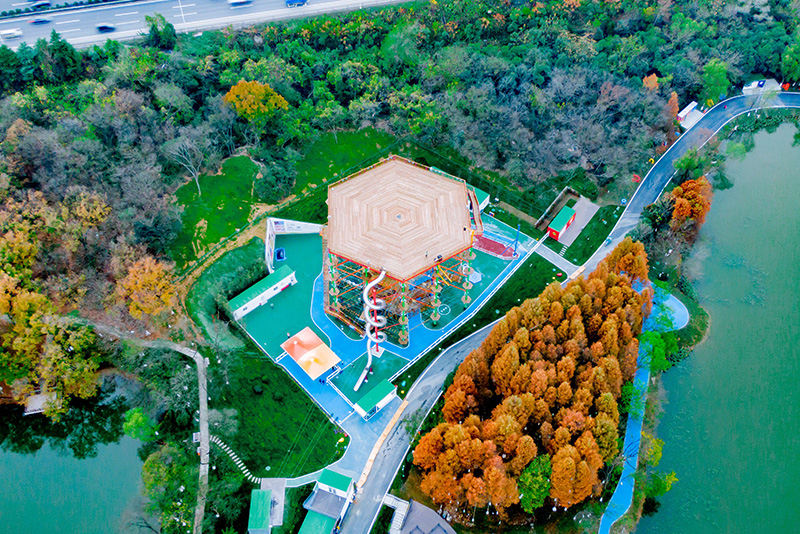
Vertical adventure attractions have a clear advantage here: they use space on multiple levels. While guests climb above, the area below can be used for children’s courses, seating areas, spectator zones, ticketing, food and beverage concepts or access routes, depending on the overall layout.
This does not automatically improve ROI. But it creates the basis for more experience value, higher quality of stay and greater revenue potential on a limited footprint. For resorts, leisure parks, mountain destinations or urban tourism sites, this efficient use of space can be a decisive factor when evaluating a new attraction.
Factor 4: Plan Additional Revenue Streams from the Start
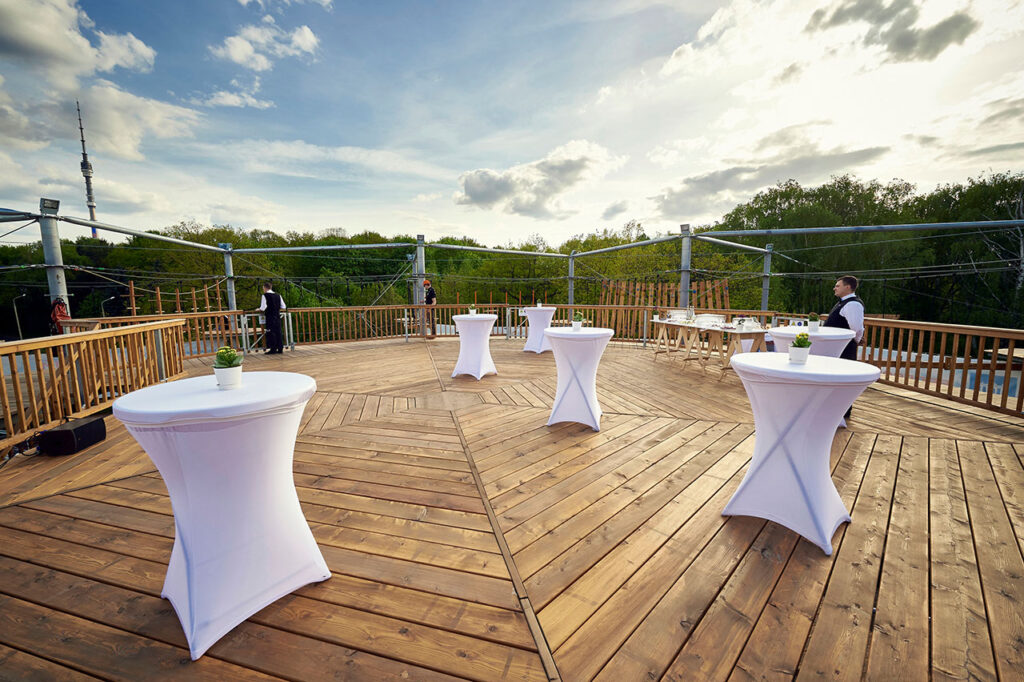
Standard single-ticket sales are only one part of the commercial potential. A high ropes course becomes especially interesting when it can serve different target groups and occasions.
Possible revenue streams include:
- Single tickets and group tickets
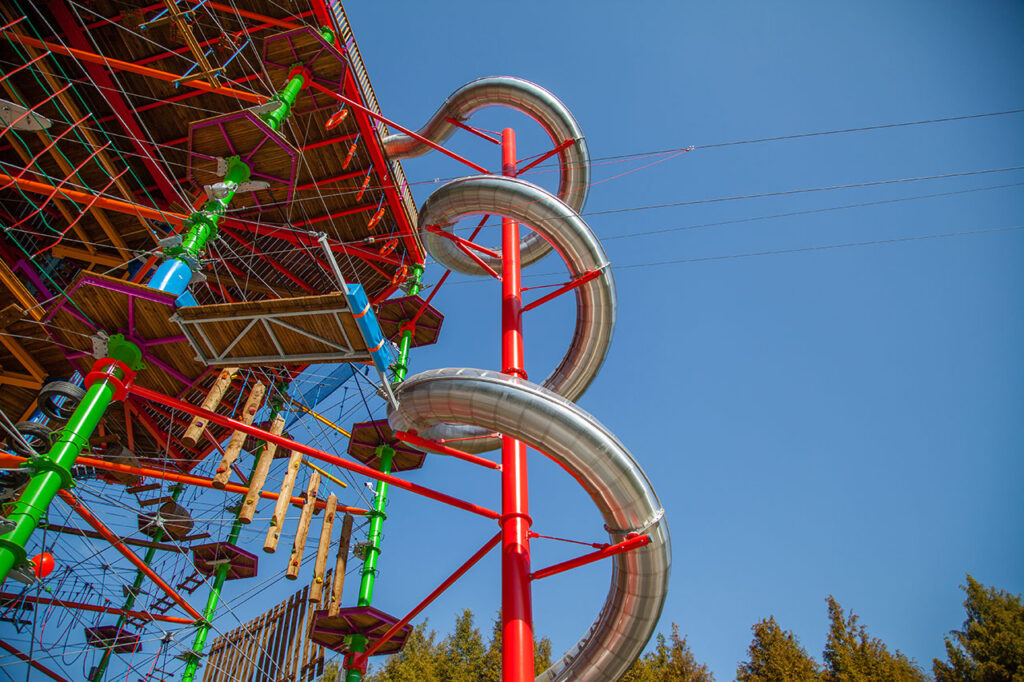
- Special tickets for add-on elements such as viewing platforms, giant swings or children’s courses
- Birthday parties, school groups and clubs
- Corporate events, incentives and team-building programmes
- Combined tickets with mountain lifts, amusement parks, swimming pools, hotels or other attractions
- Food and beverage, merchandising, photos or add-ons
- Holiday programmes, evening formats and seasonal events
The more versatile an adventure attraction is, the better it can be utilised throughout the season. For operators, this means that the attraction should not only create short-term attention. It should also generate recurring reasons to visit for different target groups.
Factor 5: Calculate Operating Costs Realistically
A fast ROI is not created by high revenues alone. It also depends on realistic planning and control of ongoing costs.
These include staffing, maintenance, spare parts, inspections, training, rescue exercises, insurance, cleaning, marketing and administration. Such costs should not be considered only after the investment decision has been made. They belong in the calculation from the very beginning.
Modular and standardised systems can offer advantages here, as planning, production, documentation, maintenance and later extensions are easier to calculate. Nevertheless, every publicly operated leisure attraction requires professional operation, regular inspection and trained staff.
If these costs are underestimated, the ROI may look better on paper – but not in real operation.
Calculate the ROI Potential of Your Location
How quickly could a high ropes course pay off at your location? Our Profit Calculator provides an initial indication based on experience gained from operating various KristallTurm® High Ropes Courses.
This rentability calculation is based on experiences from KristallTurm® High Ropes Courses at various locations worldwide. Those figures must be adapted to your individual project depending on location, operating model and financing situation. The calculations are therefore based on assumptions and have to be updated with your specific information.
Questions to Clarify Before Investing
Before deciding on a high ropes course, adventure park concept or comparable leisure attraction, operators and investors should review the following points in particular:
- How many visitors does the location currently attract – per year, per season, per weekday and during peak times?
- Which target groups should be addressed?
- Which ticket prices are realistic?
- What capacity can realistically be achieved, including briefing, equipment and supervision?
- How many staff members are required during normal operation and at peak times?
- Which additional revenue streams are possible?
- Which permits, inspections and safety processes will influence the timeline and costs?
- Can the installation be expanded or adapted at a later stage?
These questions quickly show whether a project is economically viable – and which factors have the greatest influence on profitability.
Conclusion: A Fast ROI Is Not a Guarantee, but the Result of Good RESEARCH & Planning
A high ropes course can be a very strong investment, especially when it is part of a well-thought-out location concept. What matters is that target groups, visitor flow, staffing, marketing and additional offers work together.
The best business case is not the most optimistic one. It is the one that still works under critical assumptions — while leaving enough potential for future growth.


Every location is different. That’s why KristallTurm® looks not only at the installation itself, but also at visitor flows, target groups, space potential and possible additional revenue streams. We would be happy to advise you individually on the opportunities for your location and your project.