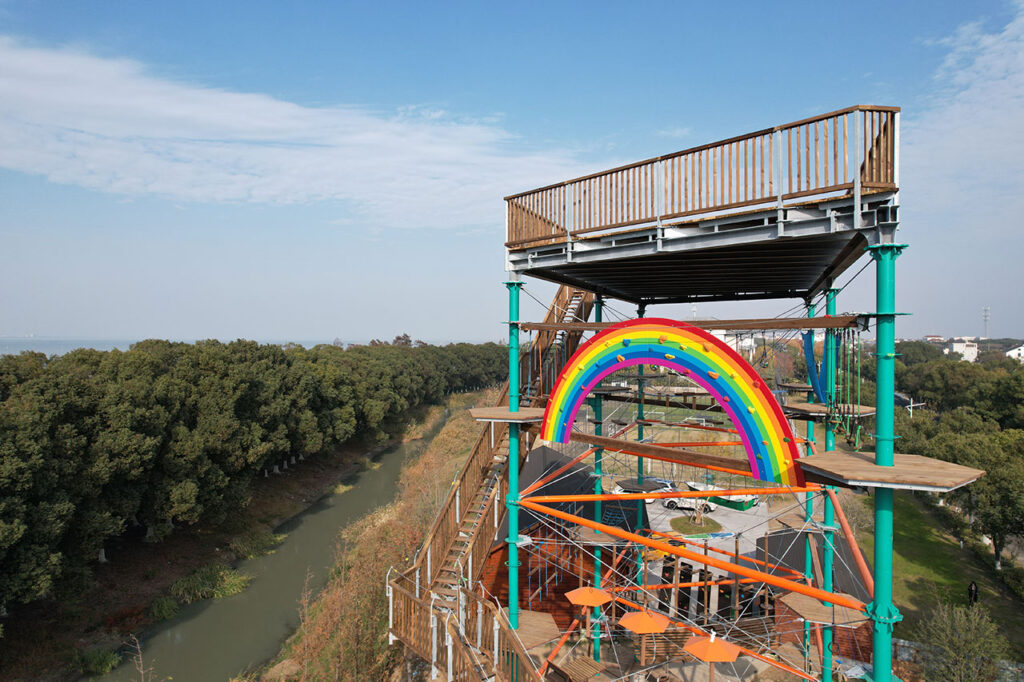
WHY A HIGH ROPES COURSE PAYS OFF
Unlocking the Hidden Value of Underused Spaces
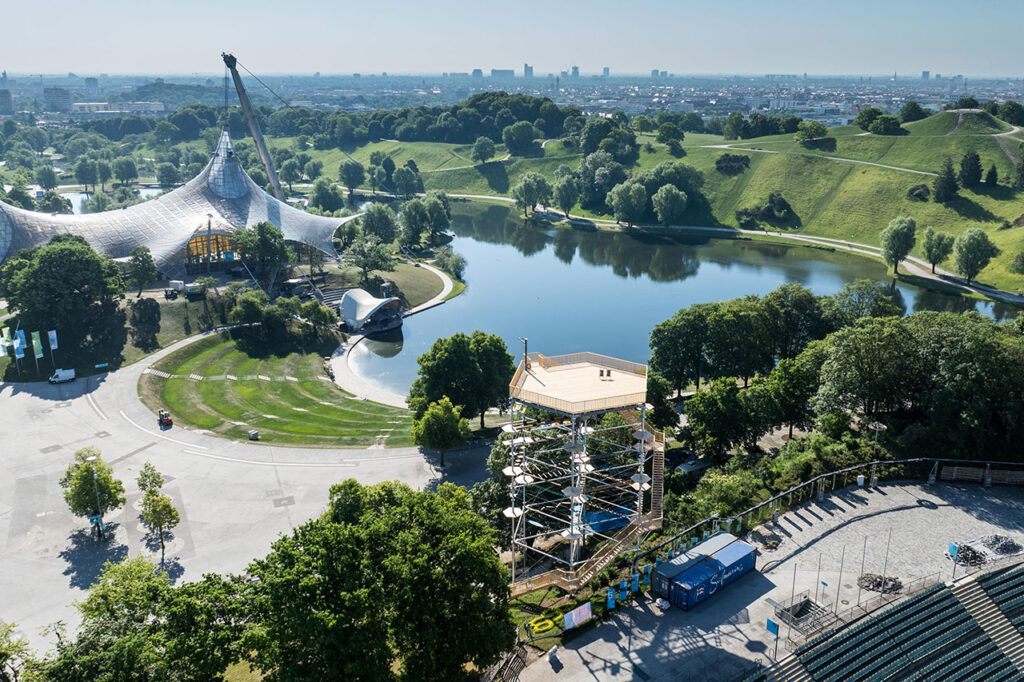
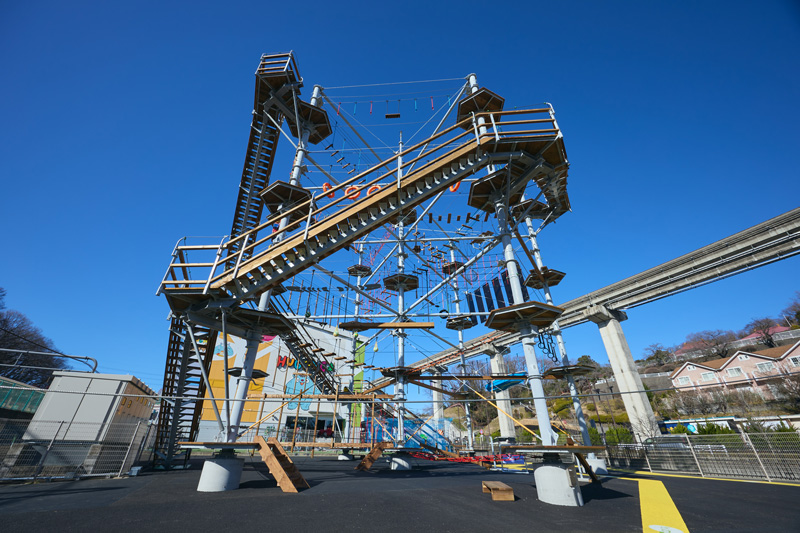
A parking lot, a hotel lawn, a zoo expansion zone, a mountain base area – these are not obvious adventure sites. But attractions like a High Ropes Course can turn them into one. For operators and investors, that shift matters. The right installation does more than add activity. It creates a visible attraction, broadens audience appeal, and converts underused space into a revenue-producing asset.
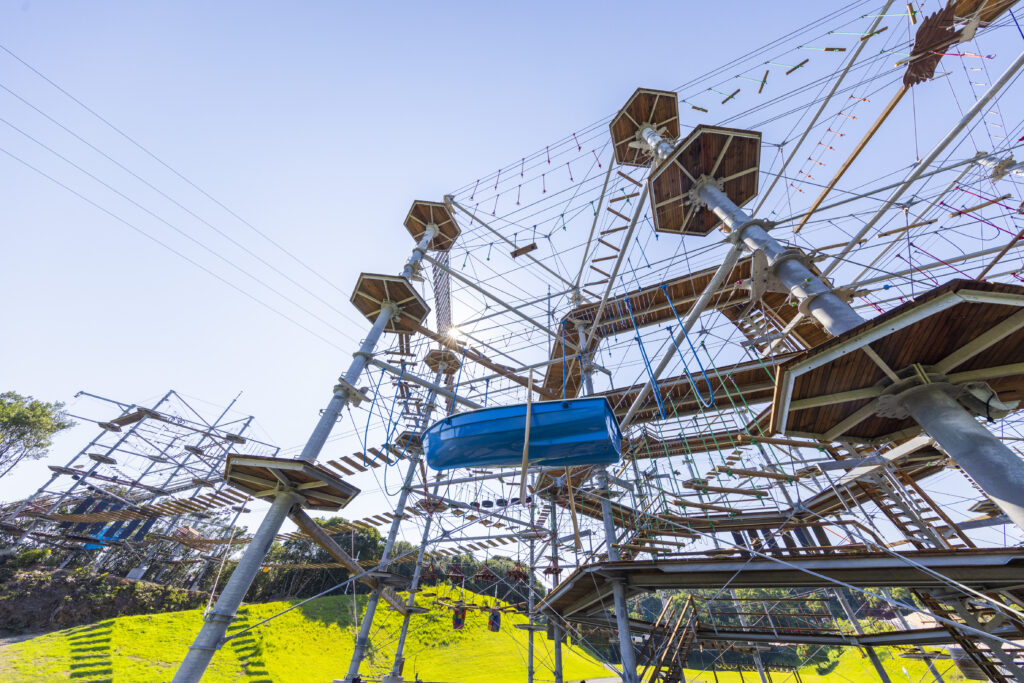
What makes a modular high ropes course special? It’s built from a system of engineered components that can be configured to match a site, target group, and business model. That sounds simple, but commercially it changes almost everything.
Unlike tree-based climbing parks, a free-standing modular system is not tied to forest conditions, land irregularities, or seasonal constraints around natural growth and environmental sensitivity. It can be planned where guests already are – inside resorts, beside waterparks, near family entertainment centers, in urban leisure districts, or as part of a municipal recreation project.
That flexibility is one of the main reasons developers choose the format. You are not starting with the question, “Where are the right trees?” You are starting with the better question, “Where will this attraction perform best?” The business case is stronger than many buyers expect.
THE BUSINESS CASE IS STRONGER THAN MANY BUYERS EXPECT
Decision-makers rarely need help understanding the guest appeal of aerial adventure. The bigger issue is whether the numbers work. In many cases, they do – especially when the course is engineered from the start around throughput, footprint, and operating efficiency.
A modular high ropes course can generate revenue from a relatively compact area. That matters for sites where land is expensive, fragmented, or already programmed with multiple uses. Vertical design adds capacity without demanding a large horizontal footprint, which makes the attraction attractive for urban projects, mixed-use leisure developments, and operators trying to increase yield per square foot.
Staffing is another major factor. Compared with some attraction formats that require intensive supervision or high power consumption, a properly designed ropes course can run with comparatively lean operations. The exact staffing model depends on safety system, local regulations, and visitor profile, but the structure itself is built for repeatable operation rather than daily improvisation.
Maintenance also tends to be more predictable when the system is industrially manufactured and standardized. That does not mean maintenance is minor – any public-use attraction needs inspections, servicing, and trained operational procedures. But predictable maintenance is easier to budget than site-built complexity with inconsistent components.

SMALL FOOTPRINT

HIGH CAPACITY & THROUGHPUT

LONGER DWELL TIME

LOW OPERATING COSTS
WHY MODULAR DESIGN MATTERS FOR ROI?
Not every ropes course project has the same commercial goal. Some venues need a starter attraction that lifts dwell time and secondary spend. Others want a signature tower that becomes a destination driver and a marketing image in its own right. Modular design supports both ends of that spectrum.
Because the structure is configured rather than improvised, the investment can be aligned with the venue’s traffic, pricing strategy, and growth plan. A family resort may prioritize broad accessibility, moderate intensity, and strong repeatability. A destination attraction may push for height, visibility, and challenge levels that justify premium ticket pricing.
This is where many projects succeed or fail. Bigger is not always better. A landmark-scale installation can create strong pull, but only if the market can support the volume and ticket value. In a smaller catchment area, a more compact layout with excellent utilization may produce the sounder return. The best projects are not designed around maximum hardware. They are designed around sustainable usage.
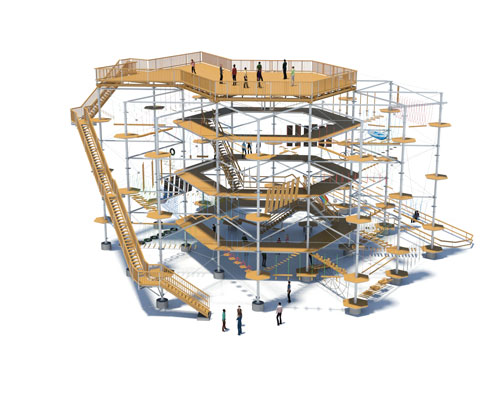
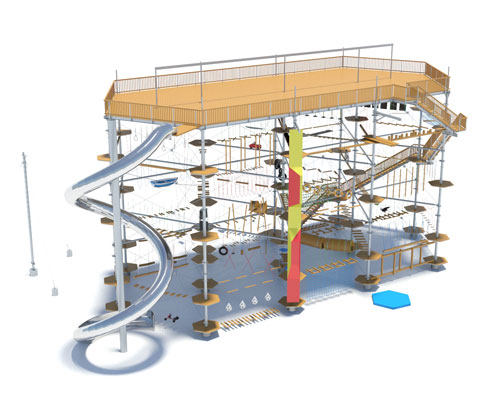
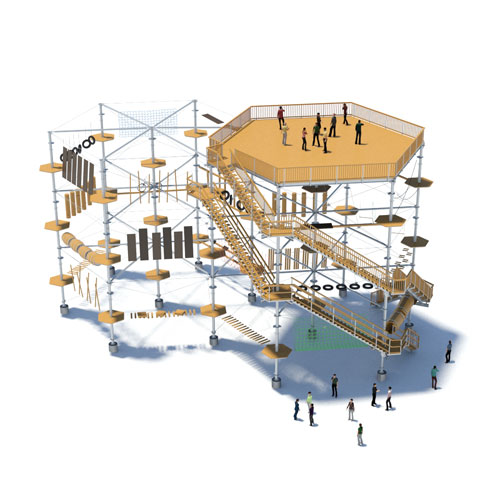
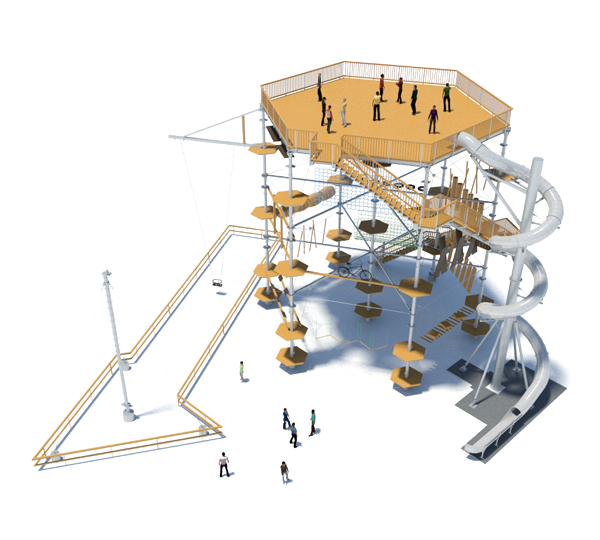
Different sites and goals require different solutions. That’s why we offer a modular range of high ropes courses designed to meet diverse requirements and site conditions.
A modular high ropes course works across VARIOUS venue types
One reason the category keeps gaining ground is that it solves a basic development problem: many high-value leisure sites do not have the natural conditions for a classic forest ropes park. They do, however, have guests, visibility, parking, utilities, and established traffic patterns.
That makes the format well suited for amusement parks, resorts, campgrounds, zoos, family entertainment centers, shopping destinations, cruise environments, and public recreation sites. It can also complement existing attractions rather than compete with them. A guest who rides, swims, shops, or attends an event may still have time for a 45- to 90-minute ropes experience.
For municipal and public-sector planners, the appeal is slightly different. A free-standing system brings active recreation into places where natural infrastructure is limited. It also offers a more controlled and inspectable environment, which often fits public procurement and risk management requirements better than improvised outdoor installations.
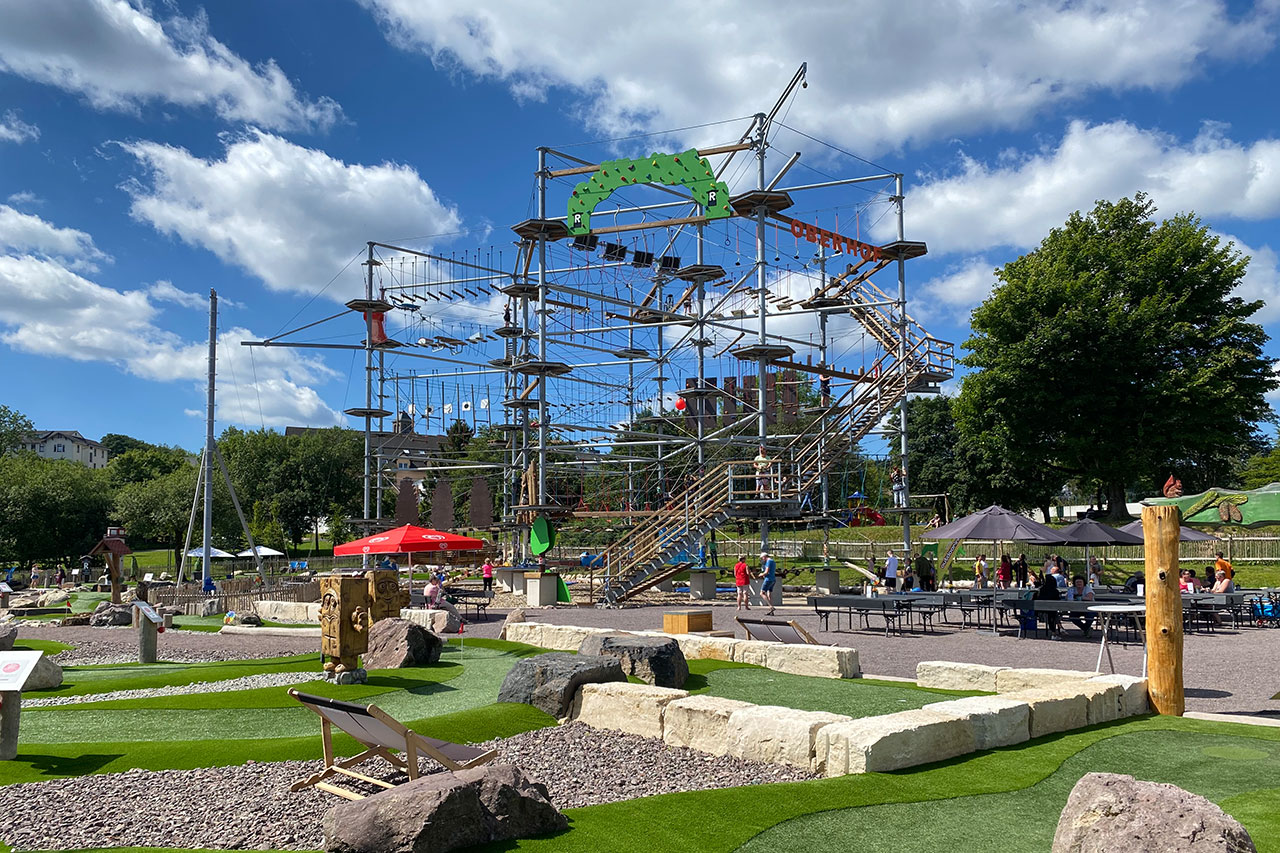
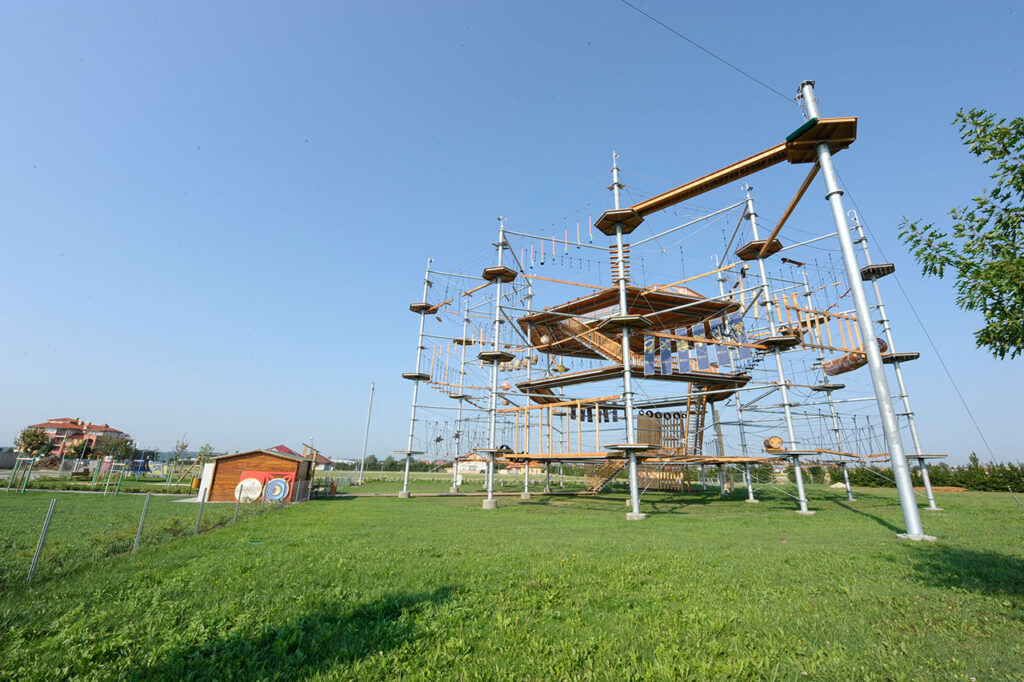

Throughput, not just excitement, should guide design
Excitement sells the first ticket. Throughput protects the business. A commercially successful course requires a layout that keeps participants moving while maintaining a strong sense of challenge and enjoyment. Bottlenecks at key elements reduce throughput, repetitive experiences discourage repeat visits, and an unbalanced difficulty progression risks leaving some guests bored while overwhelming others.
Good modular design handles these tensions through level planning, route variety, and participant flow. Different heights and challenge zones can broaden the target audience. Parallel elements and multiple route choices help reduce waiting. Entry and briefing zones need to support efficient onboarding, because the guest experience starts before the first platform.
Safety is a business topic, not just a technical one
In this sector, safety is often discussed as a compliance issue. That is only part of the picture. For investors and operators, safety affects insurability, staffing, reputation, lifecycle cost, and public acceptance.
A well-engineered modular system offers advantages because its components, interfaces, and load paths are part of a tested concept rather than a one-off build. That consistency matters during planning, certification, installation, and ongoing inspection.
Just as important, safety should be considered in relation to the target audience. A course designed for broad family participation will not be configured the same way as one meant to attract thrill-seeking teens and adults. The challenge profile, rescue planning, supervision concept, and user guidance all need to fit the intended operation.
This is also why turn-key support matters. Manufacturers with experience in training, inspections, maintenance, and operational planning reduce friction between concept and daily reality. KristallTurm® has built its position on that full-project perspective, combining modular engineering with business-focused planning and long-term service support.
Customization is valuable, but standardization keeps projects efficient
Buyers often assume customization and efficiency are at odds. In a strong modular system, they support each other.
Customization allows the attraction to fit the site, the brand, and the audience. Standardization keeps manufacturing, installation, and maintenance disciplined. That balance is especially important for commercial projects where delays, special parts, or unresolved engineering questions can quickly erode returns.
It also helps future-proof the asset. If a venue expands, repositions its audience, or adds adjacent attractions, a modular concept may offer more practical pathways for extension or reconfiguration than a fully bespoke structure with no system logic behind it.
Of course, flexibility has limits. Not every site can support every tower height or layout. Local permitting, wind conditions, access requirements, noise considerations, and budget boundaries still shape what is realistic. A credible project partner should say so early.
When the investment makes the most sense
A modular high ropes course is especially compelling when a venue needs one or more of the following:
- Visual landmark
- Higher dwell time
- Family-friendly activity
- Attraction with broad target group & age appeal
- Compact revenue generator
- Attraction independent of natural terrain
For the right site, a modular high ropes course offers a powerful combination of guest appeal, operational efficiency, and long-term flexibility. It can scale from a compact attraction to a destination-defining landmark.
The real opportunity is not just to add climbing. It is to create an attraction that strengthens the venue, supports revenue growth, and stays in guests’ memories.
Ready TO UNLOCK THE POTENTIAL OF YOUR SITE?
Whether you’re developing a new attraction or looking to make better use of existing space, the right course design can make all the difference. Our experts help you create a solution tailored to your location, audience, and business goals.